9th Scientific Conference [Event Report]
We held the 9th Scientific Conference on Sunday, 21 September 2025.
Held in a hybrid format with both in-person and online participation, the conference welcomed a wide range of attendees, including healthcare professionals, representatives from companies and research institutions, patients and their families, and members of the public.
We extend our heartfelt thanks to everyone whose support helped make the conference a success.We have shared the results of the survey completed by participants in a separate article.We invite you to read it as well.(Read the survey summary here)
We are now accepting registrations for on-demand access to recordings of all conference sessions.We also encourage those who were unable to attend on the day to take this opportunity to register and watch the recordings.
Clinical Research Society for Intestinal Microbiota Transplantation
9th Scientific Conference
A Key to New Treatments: The Future Shaped by Intestinal Microbiota Transplantation
Registration is now closed.
◼︎ Schedule
9:00 Doors Open
10:00 onwards Opening and Morning Session
 Representative Director: Yoshimu Tanaka (Chairman, Jinzenkai Medical Corporation; Director, Tanaka Clinic)
Masayuki Oe Holm (Chairman, LAGOM Medical Corporation, Life Clinic Tateshina)
Kensho Yorozu (Chairman, Ishinkai Medical Corporation; Director, Yorozu Clinic)
Yoshimu Tanaka (Chairman, Jinzenkai Medical Corporation; Director, Tanaka Clinic)
Yoshikazu Ishikawa (Chairman, Aiwakai Medical Corporation; Director, Sakuragawa Dental Clinic)
Shoki Toyofuku (Director, Hyogo Minato Animal Hospital)
Shin Shimizu (Senior Researcher, Shinbiosis Corporation)
13:30 onwards Afternoon Session
New Possibilities in Health and Medicine through Visualisation of the Gut Environment
Jun Kunisawa (Deputy Director, National Institute of Biomedical Innovation; Director, Microbial Research Center for Health and Medicine, National Institutes of Biomedical Innovation, Health and Nutrition)
Yuichi Kawai (Chairman, Yuakai Medical Corporation; Director, Kawai Internal Medical Clinic)
Masahiko Shirotani (Director, Shirotani BioWellness Clinic, Internal Medicine and Orthodontics, Kobe Sannomiya)
Executive Director: Masahiko Shirotani (Director, Luke’s Ashiya Clinic)
17:30 onwards Networking Reception
.
◼︎Speakers
keynote speech
Deputy Director, National Institute of Biomedical Innovation, National Institutes of Biomedical Innovation, Health and Nutrition
Director, Microbial Research Center for Health and Medicine (concurrently)
 The gut microbiota is increasingly recognised as having a significant impact on individual immune function and metabolism, as well as playing a role in disease risk and responses to treatment. In this lecture, I will introduce the potential of gut bacteria revealed through research involving Japanese populations, along with technologies for “visualising” the gut environment by combining analyses of gut bacteria themselves and the metabolites they produce. I will also discuss the possibilities for personalised preventive medicine and novel diagnostic and therapeutic approaches emerging from these technologies.
Profile of Dr. Jun Kunisawa
He graduated from the Faculty of Pharmaceutical Sciences at Osaka University in 1996 and earned a Ph.D. in Pharmaceutical Sciences from the same university in 2001. After studying at the University of California, Berkeley, in the United States, he joined the Institute of Medical Science at the University of Tokyo as an assistant professor in 2004. After serving as an assistant professor, lecturer and associate professor at the same institute, he became a project leader at the National Institute of Biomedical Innovation in 2013. He has served as a centre director since 2019 and as deputy director since 2024. He also holds concurrent appointments as a visiting or adjunct professor at the University of Tokyo, Osaka University, Kobe University, Hiroshima University and Waseda University.
His work for general audiences includes the books “The Amazing World of the Gut Revealed by Studying 9,000 People” (Nikkei BP) and “Revolutionising Gut Health with Beneficial Enzymes” (Shufu to Seikatsu Sha), as well as the YouTube videos “A Gut Researcher’s Guide to Eating for Gut Health” and “Gut Bacteria Hold the Key to Weight Loss” (both on PIVOT).
as well as the development of affordable and simple testing technologies to monitor ongoing changes in the gut environment. During the lecture, he shared changes in his own gut microbiota balance, describing this information as “the ultimate personal information”, and demonstrated how conscious improvements in dietary habits can lead to dramatic changes in the gut environment.
The lecture provided valuable insights into a comprehensive range of future strategies for personalised preventive medicine, drawing on cutting-edge research.


Morning Session
Chairman, LAGOM Medical Corporation, Life Clinic Tateshina
 Established in 2017, the Association for Clinical Research of Fecal Microbiota Transplantation Japan (General Incorporated Foundation) has continued its activities through collaboration among physicians, researchers and patients, with the aim of establishing the safety and efficacy of intestinal microbiota transplantation. This presentation reviews the association’s initiatives over the past nine years and its clinical experience of more than 600 transplantations performed across 20 medical facilities nationwide. It will share insights gained during the transition from private medical practice to specified clinical research, including the expansion of diseases targeted for treatment, patient characteristics, implementation systems at medical institutions, the development of clinical research and ethical frameworks, and the standardisation of donor management.


yor
Chairman, Ishinkai Medical Corporation; Director, Yorozu Clinic
 Optimising the gut environment is extremely important for maximising the effectiveness of immune checkpoint inhibitors (ICIs) in cancer immunotherapy. Of particular interest is the role of butyrate-producing bacteria within the gut microbiota. Butyrate, a short-chain fatty acid produced by these bacteria, activates dendritic cells, thereby promoting the presentation of cancer antigens and effectively inducing T cells to recognise and attack cancer cells. Intestinal microbiota transplantation (FMT) has attracted attention as a means of rebuilding a gut environment favourable to antitumour immunity, specifically a microbiota with a high capacity for butyrate production. Reports suggest that FMT may enhance treatment responses even in cases where ICIs alone have not been effective. FMT is expected to provide a foundation for enhancing the effectiveness of immunotherapy.
It emphasised that a key to overcoming cancer lies in memory T cells (acquired immunity), for which the effective functioning of the “cancer-immunity cycle” is essential. Drawing on the concept of the “cancer treatment pyramid”, the presentation described specific mechanisms through which improvements in overall physical condition and immune regulation, including intestinal microbiota transplantation (FMT), act as “fertiliser” to substantially improve response rates and survival duration with immune checkpoint inhibitor therapy. It also discussed data showing remarkable improvements in survival rates associated with the resolution of inflammation in the body and alkalisation, aspects that are often overlooked in standard treatment. The presentation explored innovative prospects for integrative treatment, highlighting the potential of FMT as a promising option for achieving synergistic effects alongside existing therapies.


Chairman, Jinzenkai Medical Corporation; Director, Tanaka Clinic
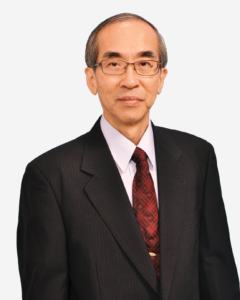 This presentation reports a case involving a male patient with stage IV appendiceal cancer who received immune checkpoint inhibitor therapy and faecal microbiota transplantation (FMT) concurrently, resulting in halted disease progression with no tumour growth observed for more than 10 months. The restoration of gut microbiota diversity and reactivation of antitumour immunity are considered possible contributing factors to the treatment response, suggesting the potential of combining FMT with cancer treatment. The aim is to elucidate the mechanisms by which FMT enhances the effectiveness of immunotherapy, hyperthermia, nutritional therapy, chemotherapy and other treatments, and to establish optimal treatment protocols.


Chairman, Aiwakai Medical Corporation; Director, Sakuragawa Dental Clinic
Deputy Director, ManakaDentalClinc
 On 28 February 2025, the book “Periodontal Disease Was the Cause of Cancer: Beware of Swollen Gums! How Periodontal Bacteria Cause Diseases Throughout the Body and Ways to Recover at Home” was published. Although the relationship between periodontal disease and systemic diseases has been elucidated, a fundamental treatment has yet to be established. Accordingly, a new approach to treating the underlying causes of periodontal disease, known as “integrative periodontal medicine”, was developed in collaboration with medical practitioners, aiming to improve immune function while considering the relationship between the oral and gut environments. Bacteraemia and gut microbiota dysbiosis resulting from the swallowing of bacteria are associated with the development of colonic diseases in the context of periodontal disease. The relationship between periodontal disease and colonic disorders was examined in light of various test results and dietary factors. Furthermore, periodontal disease and diabetes can exacerbate one another, while treatment of periodontal disease can also lower HbA1c levels. Integrative periodontal medicine examines approaches to treating systemic diseases believed to be caused by periodontal disease through collaboration between dental and medical professionals.


Director, Hyogo Minato Animal Hospital
 Faecal microbiota transplantation (FMT) is now being performed not only in human medicine but also in veterinary medicine, with reports of its effectiveness gradually emerging. However, procedures such as pretreatment with antibiotics, fasting and administration via endoscopy requiring general anaesthesia can place a considerable burden on animals with underlying medical conditions. The new FMT method used at our hospital (NanoGAS®︎-FMT), which uses water containing hydrogen nanobubbles, is characterised by its low invasiveness and the ability to perform the procedure on an outpatient basis. Some therapeutic responses, including symptom relief and reduced medication requirements, have also been observed. This presentation will discuss the usefulness and future prospects of NanoGAS®︎-FMT, supported by clinical cases.
The minimally invasive NanoGAS®︎-FMT method has been applied to skin and gastrointestinal diseases in dogs, as well as to palliative care for chronic kidney disease and malignant tumours. Notably, Dr. Toyofuku reported a case in which a gallbladder mucocele, typically considered to require surgical intervention, improved, as well as a case in which FMT intended to treat a gastrointestinal condition was unexpectedly accompanied by improved postural stability associated with vertebral dislocation. These cases were presented as suggesting the potentially far-reaching effects of FMT on metabolism.


Senior Researcher, Shinbiosis Corporation
 Our experience with FMT began in September 2007 with the first procedure performed on a patient with atopic dermatitis. Since then, we have performed more than 2,000 procedures, with an average response rate exceeding 75%. From the outset, we have consistently adhered to the principles of “no pretreatment required” and “ultra-low concentration”, keeping adverse events to an extremely low level. In recent years, FMT has become more widespread in Japan and overseas, with improvements reported in various diseases; nevertheless, our association’s results remain unmatched.
Drawing on these achievements and experience, this presentation will introduce an innovative gut microbiota transport technology and a new FMT method developed to enable more medical institutions to adopt FMT.


Afternoon Session
Chairman, Yuakai Medical Corporation; Director, Kawai Internal Medical Clinic
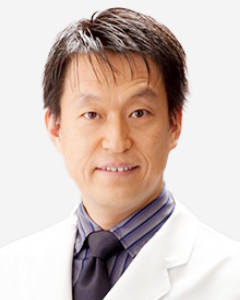 This clinical study was conducted from May 2023 to March 2024 with the aim of providing a safe and effective intervention for 30 children with autism spectrum disorder (ASD), for which no established treatment is available, using a novel faecal microbiota transplantation (FMT) method involving hydrogen nanobubble water. This method is characterised by its gentle approach, requiring neither antibiotic administration nor bowel cleansing and using a bacterial dose no more than one-thousandth of that used in conventional methods. Last year, we reported that noticeable changes were observed in more than 70% of the children six months after completing the study. This presentation reports two-year follow-up data from the study, covering improvements in core ASD symptoms, quality of life, sustained changes in gut microbiota diversity, safety indicators and parental satisfaction. Furthermore, based on these significant findings, we will discuss future directions for further investigation and development.


Director, Shirotani BioWellness Clinic, Internal Medicine and Orthodontics, Kobe Sannomiya
 Our foundation is an intermediary organisation whose mission is to translate new medical findings obtained in clinical practice into practical applications for society based on rigorous scientific evidence, providing safe and effective medical care to all patients. Building on the results of specified clinical research involving a novel FMT method previously demonstrated in private medical practice, we aim to become an organisation that serves the public good to an even greater extent. Since the establishment of the research society in 2017, we have considered the evolving global regulatory environment surrounding FMT and emerging technologies such as LBP transplantation (live biotherapeutic products). This presentation will discuss the need for quality standards while examining our future direction.


Dr. Jun Kunisawa(Deputy Director, National Institute of Biomedical Innovation, National Institutes of Biomedical Innovation, Health and Nutrition
Director, Microbial Research Center for Health and Medicine (concurrently))
Executive Director Masahiko Shirotani(Director, Shirotani BioWellness Clinic, Internal Medicine and Orthodontics, Kobe Sannomiya)
Director Kensho Yorozu(Chairman, Ishinkai Medical Corporation; Director, Yorozu Clinic)
Director Yuichi Kawai(Chairman, Yuakai Medical Corporation; Director, Kawai Internal Medical Clinic)
Yoshikazu Ishikawa (Chairman, Aiwakai Medical Corporation; Director, Sakuragawa Dental Clinic)
Shoki Toyofuku (Director, Hyogo Minato Animal Hospital)
Moderators:
Director Kunihiro Kitamura(Chairman, Kiwakai Medical Corporation; Director, Kitamura Clinic)
Representative Director Yoshimu Tanaka(Chairman, Jinzenkai Medical Corporation; Director, Tanaka Clinic)


■ Participant Survey
We have compiled the survey responses from participants in the 9th Scientific Conference by session. Please see the article below for a summary of the survey results.
■ Conference Overview
The Association for Clinical Research of Fecal Microbiota Transplantation Japan (General Incorporated Foundation)
9th Scientific Conference
[Date]
Sunday, 21 September 2025
Scientific Conference: Doors open at 9:00 / Starts at 10:00 / Ends at 17:00
Networking Reception: Starts at 17:30 (conference participants only)
[Venue]
RIHGA Royal Hotel Osaka
5-3-68 Nakanoshima, Kita-ku, Osaka
(Directions: https://www.rihga.co.jp/osaka/access)
Live Online Streaming
*Hybrid format: on site (RIHGA Royal Hotel Osaka) and online (live streaming).
[Secretariat]
Clinical Research of Fecal Microbiota Transplantation Japan Corporation
401 Est Nouveau, 2-1-40 Katamachi, Miyakojima-ku, Osaka-shi, Osaka
E-mail: info@fmt-japan.org
TEL: 06-6809-5296 FAX: 06-6777-2204
■ Sponsoring Companies
 We have developed bacterial suspensions for faecal microbiota transplantation (intestinal microbiota transplantation) and the high-performance nanobubble water “NanoGAS®”. We currently hold multiple patents. Our “NanoGAS®” technology has also been selected for funding by NEDO, and we aim to expand its applications beyond medicine into industrial fields.
 The “H2JI1 Hydrogen Inhalation Device” has been adopted by more than 200 medical institutions and treatment clinics nationwide.
■Achieves a “blood hydrogen saturation level of 2.0%” comparable to that used in advanced medical treatments
■Industry-leading long service life, exceptional durability and low running costs
■One device with three functions: “hydrogen inhalation”, “production of high-concentration hydrogen-rich water” and “preparation of hydrogen infusions”
 Guided by our mission to help patients with cancer who have exhausted available treatment options and patients with intractable diseases for which no effective standard treatment has yet been established, we work from the perspective of preventive medicine to predict and diagnose diseases before they develop and intervene at an early stage. Through the development and clinical research of effective preventive methods, diagnostic tests and treatments, we aim to contribute to the advancement of academic research in Japan and the improvement of public health. We hold an annual scientific conference, providing a forum for discussing the latest information with participants from Japan and overseas.
https://jspcm.org/
 Guided by our philosophy of connecting people and communities through food, we provide lunches for the children who will shape the future, operate restaurants and cafés, and manufacture and sell sweets. We also place great importance on health and productivity management and hygiene management, maintaining certification as a Health & Productivity Management Outstanding Organization for six consecutive years. As a company dedicated to the future of people and food, we aim to contribute to the creation of a sustainable society.
 The traditional and trusted brand “OHTAKA ENZYME”. Originating in Hokkaido, OHTAKA ENZYME is a pioneering company that first developed fermented plant extracts in Japan. For approximately 100 years, we have maintained the same traditional production methods, striving to contribute to health and beauty through our fermented plant-based beverages. Tastings are also available at the event. We look forward to seeing you.
 We offer supplements focused on the gut environment. Our products are characterised by “multi-strain formulations designed for the gut environment, where microbial diversity is essential”, “hypoallergenic products reflecting the philosophy of Claire Farr”, and “proprietary technology that delivers live bacteria to the gut”. Our products are currently used by many people in more than 15 countries, primarily through medical institutions.
 We have always pursued safety and reliability, continuously exploring ways to provide infection-prevention products that people can use with confidence. “Nano-Pico MIST” is a product designed to be used with complete peace of mind, without the use of any chemicals. Made solely from water and pico-sized bubbles, it is the world’s first infection-prevention product designed to adsorb and inactivate bacteria, viruses and pollen.
 Owner-chef Isao Kuroiwa established a welfare facility out of his desire to create a workplace where people with and without disabilities can work together. At the welfare facility in Tenmabashi, service users known as “cast members” are involved in a wide range of activities, including food preparation, dessert making and customer service. We will be offering baked goods (five varieties of our highly popular handmade cookies) at the event!
 SOPHIA is a gut health supplement containing metabolites produced by 16 strains of human-derived lactic acid bacteria and bifidobacteria, fermented and matured for one and a half years in a pesticide-free soy milk culture medium. Metabolomic analysis has identified 465 metabolites, including short-chain fatty acids such as butyrate. While supporting gut microbiota diversity, the product is designed to support not only gut health but also immune and oral health. We will explain the latest case reports and scientific evidence involving humans and pets, as well as the most effective ways to take the supplement. Please visit our booth.https://www.sophia1000.com/ja/
■ Related Information
8th Scientific Conference
The report on last year’s 8th Scientific Conference is available on the page below.
Approximately 200 people attended the 8th Scientific Conference, either in person or online. Healthcare professionals and company representatives accounted for 30% of attendees, while the remaining 70% were members of the public, including patients receiving transplantation, people considering transplantation and their families.
.
.z
9th Scientific Conference
A Key to New Treatments: The Future Shaped by Intestinal Microbiota Transplantation
Registration is now closed.
更新履歴
・公開日:2025年1月30日
・更新日:2026年2月1日
その他の Academic Conference に関する記事
Articles about other Academic Conference
September 28, 2026
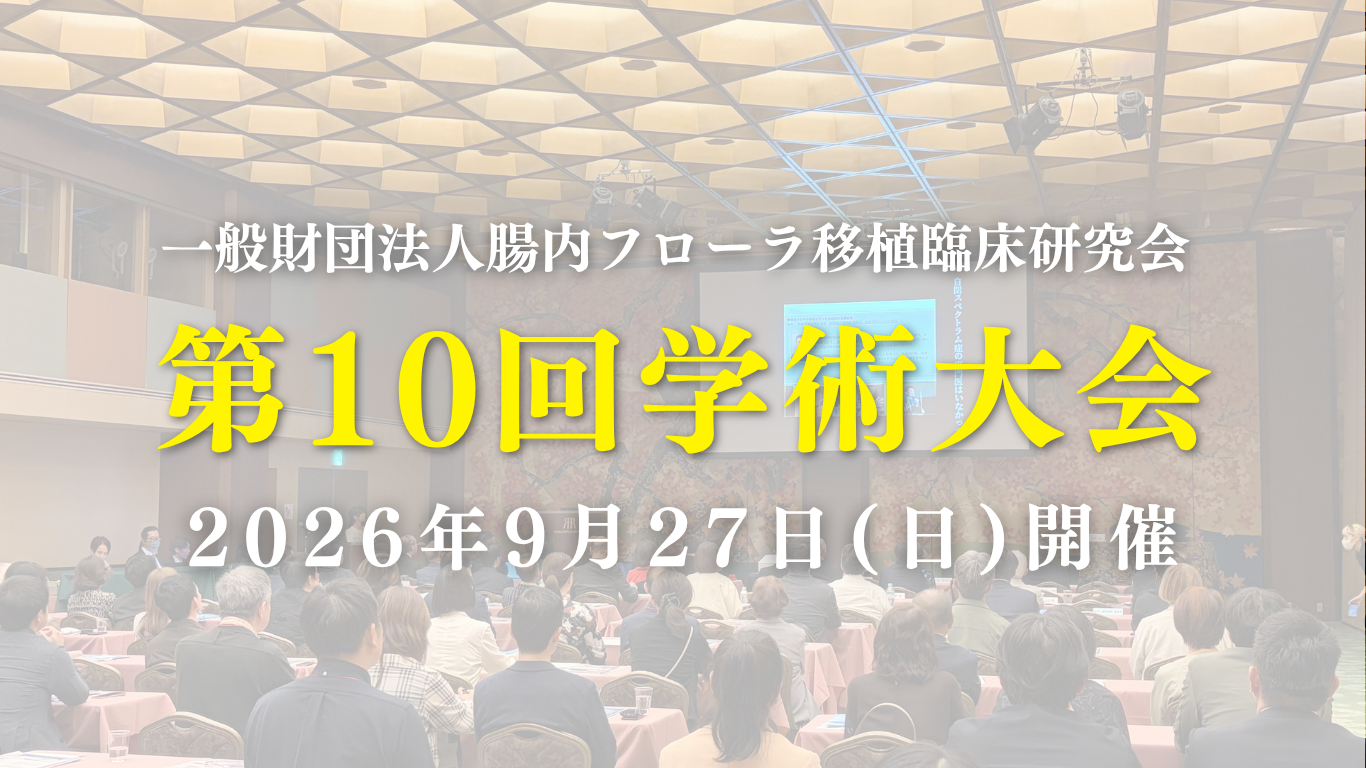
10th Scientific Conference of the Association for Clinical Research of Fecal Microbiota Transplantation Japan [Event Report]
The Association for Clinical Research of Fecal Microbiota Transplantation Japan (General Incorporated Foundation) held its 10th Scientific Conference on Sunday, 27 September 2026. At this milestone 10th conference, we presented the latest findings and clinical data on “NanoGAS®-FMT” across a wide range of clinical fields, including cancer, gastroenterology, neurodevelopmental disorders and endoscopic examinations, for those […]

February 01, 2026
9th Scientific Conference [Event Report]
We held the 9th Scientific Conference on Sunday, 21 September 2025. Held in a hybrid format with both in-person and online participation, the conference welcomed a wide range of attendees, including healthcare professionals, representatives from companies and research institutions, patients and their families, and members of the public. We extend our heartfelt thanks to everyone […]
October 22, 2024
第7回学術大会【開催報告】
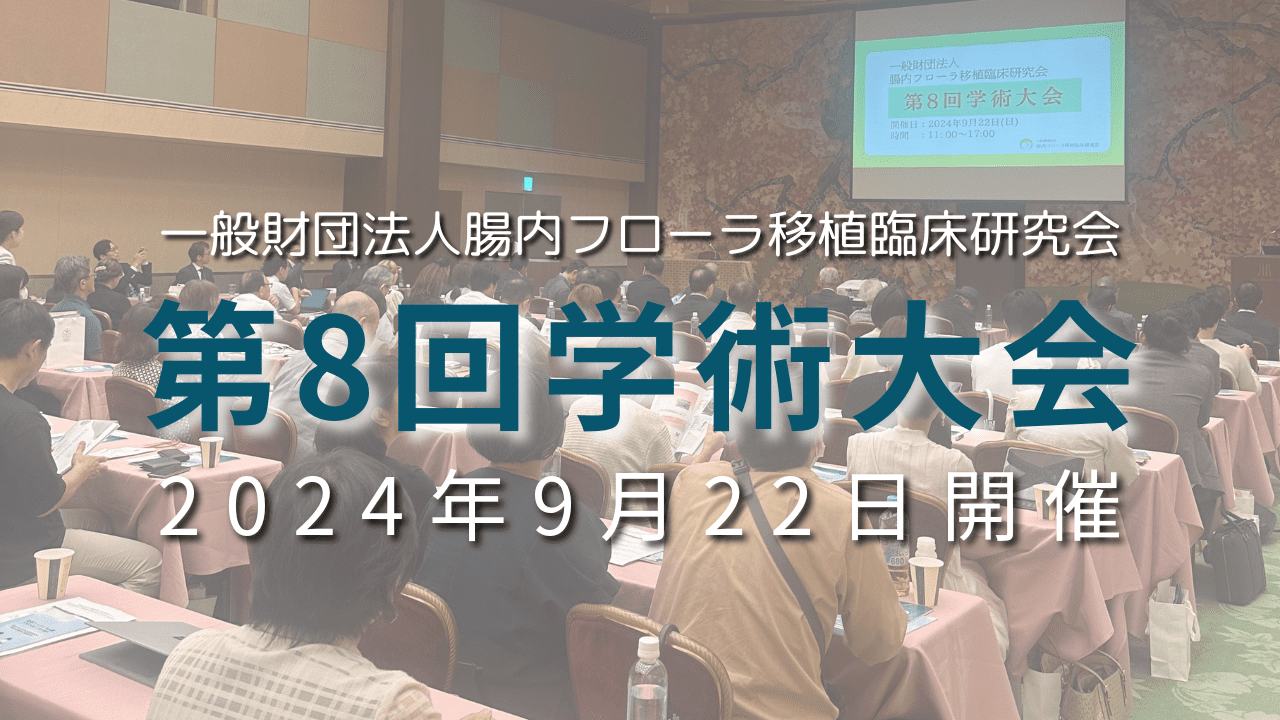
2024年9月22(日)に「第8回学術大会」を開催いたしました。会場とオンラインの同時開催で行い、医療関係者や一般企業の方、研究機関の方、患者様やご家族、そして一般の方など沢山の方々にご参加いただきました。皆様のお陰で無 […]